David
David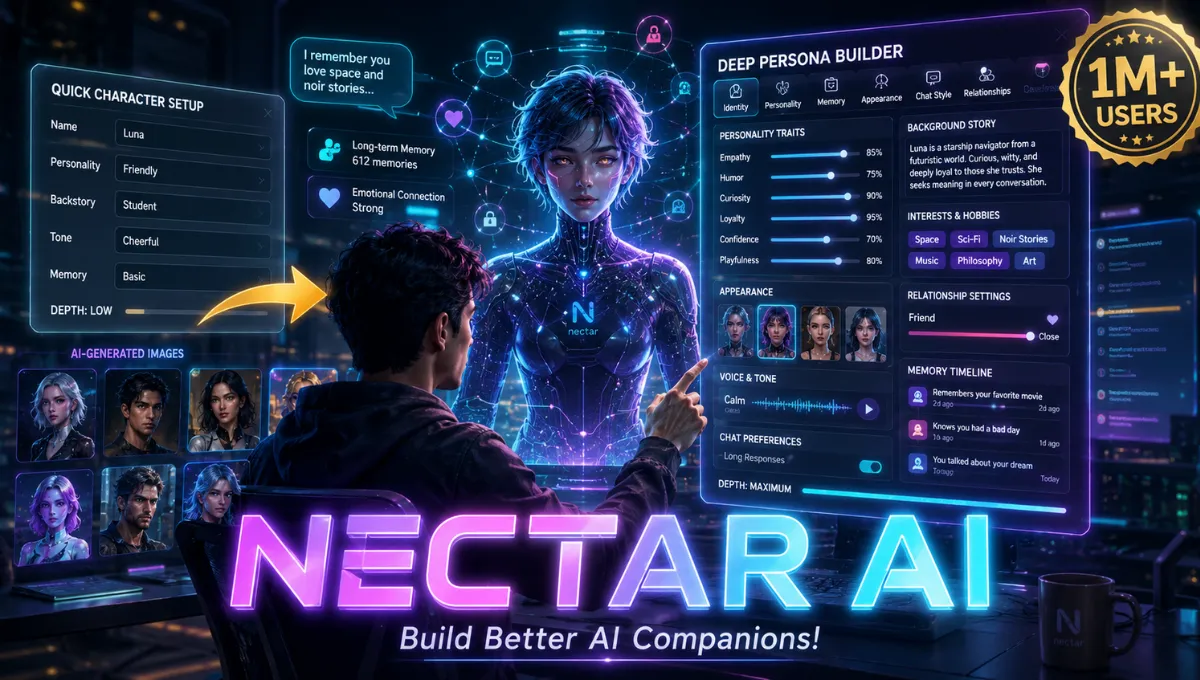
If you’ve been comparing Nectar AI against a dozen other companion apps and still cannot tell whether it’s genuinely good or just well-marketed, that confusion is completely fair. I went through the same maze, and the answer turns out to be more nuanced than a simple thumbs up or down.
This Nectar AI review pulls from actual pricing breakdowns, hands-on testing across multiple independent reviewers, and business-transparency checks, because “legit or scam” and “worth your money” turn out to be two very different questions here.
Short version upfront: it’s a real, verifiable company with genuinely strong roleplay features, but the pricing structure hides more cost than the sticker price suggests .
What Is Nectar AI
Nectar AI is an AI companion and roleplay platform where you build customized virtual characters, chat with them, and generate matching images within the conversation. It launched in 2024 with a focus on emotional companionship, eventually expanding into interactive video calls, voice chat, and deep character memory.
The platform sits in the crowded AI-girlfriend category, but multiple independent reviewers consistently single out one specific strength: character consistency across long sessions. One 2026 test put it directly, Nectar “keeps characters in character across long sessions and across multi-week breaks,” calling that consistency “the single most important feature in the category” .
Key Features
Here’s what stood out once reviewers actually spent real time testing the platform.
- Free tier available, though multiple testers describe it as “the stingiest free trial” they tested all year
- Premium tier around 9.99 dollars monthly, dropping to roughly 5 dollars on annual billing
- Pro and Ultimate tiers scaling up to 19.99 and 34.99 dollars monthly respectively
- Above-category-average image generation, tested at roughly 80% accuracy
- Editable memory system that scored 19 out of 20 in one detailed conversation test
- Interactive video calls, a feature few direct competitors offer
That free-tier honesty score matters. One reviewer explicitly scored “free-tier honesty” at just 5 out of 10, which tells you the marketing promises more free access than you’ll actually get in practice.
How Nectar AI Works
Getting started follows a familiar pattern for this category, with a few Nectar-specific wrinkles.
- Sign up on the official site or app, not a random APK mirror
- Build a custom character using the deep customization tools, covering appearance and personality
- Start chatting within the free tier’s limited daily message allowance
- Purchase credits or upgrade to Premium for extended messaging, image generation, and voice features
- Manage renewal timing carefully through account billing settings before your next charge
That credit system is worth understanding before you commit any money, since it operates alongside your monthly subscription rather than replacing it entirely.
Nectar AI Legit or Scam
Short answer: Nectar AI is legit it’s a real operating business with public funding history, affiliate programs, and active social channels, not a fly-by-night wrapper app, and no credible scam patterns like mystery charges or malware installers have been tied to the official domain.
Trust signals here are genuinely solid. One 2026 review specifically verified Nectar as “a real operating business with public funding history,” explicitly distinguishing it from disposable wrapper apps that vanish after collecting subscriptions. Another reviewer echoed this directly: “Nectar AI feels like a real commercial platform, not a fly-by-night fake app”.
So is Nectar AI real or fake as a company? It’s completely real, verifiably funded, and has been operating consistently since 2024. The nuance isn’t about legitimacy, it’s about transparency in pricing, since the credit system and tiered plans create actual costs well above what the advertised starting price suggests.
Pros and Cons
Laying this out plainly beats vague marketing language either way.
Pros
- Verified real business with public funding and active operations, not a scam shell
- Industry-leading character consistency across long, multi-week roleplay sessions
- Strong image generation quality, among the best tested in its category
- Editable memory system rated highly across independent tests
- No known data breaches, with chats encrypted in transit
- Genuinely competitive value at 9.99 dollars monthly compared to pricier rivals
Cons
- Free tier is notably limited, scoring poorly on “free-tier honesty”
- Real monthly cost often exceeds the advertised price once credits are factored in
- Voice quality described as “overly professional” in a widely reported complaint
- Memory scored only “average” in at least one independent test, despite strong marks elsewhere
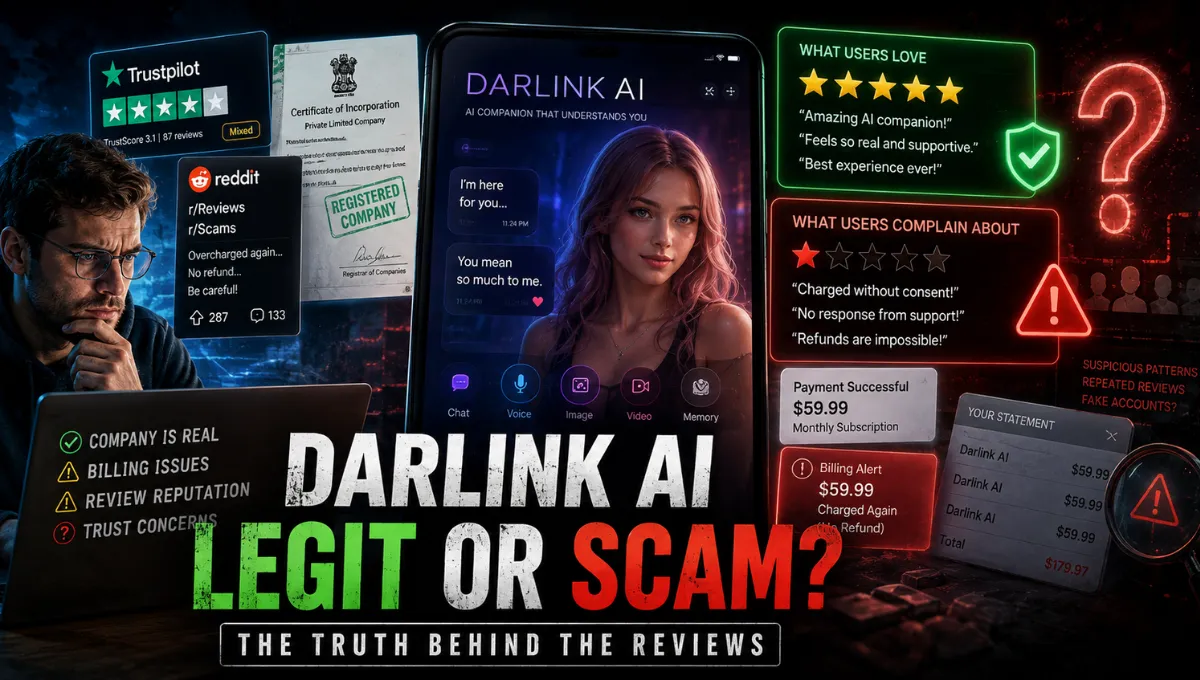
- Not the single best option overall, with Candy AI and Darlink AI edging it out in overall polish
- Credit economy requires active management to avoid unexpected costs
Is Nectar AI Safe to Use
Short answer: Yes, Nectar AI is safe to use as a legitimate commercial platform with no known data breaches and encrypted chat transmission, but standard category caution still applies around personal information and payment sources.
Privacy scores across independent reviews land consistently in the reasonably strong range, from 8.7 to 8.9 out of 10 depending on the tester. One dedicated safety check confirmed “no known breaches, discreet billing descriptor, chats encrypted in transit,” while noting the privacy policy uses “the same hedged language about training data as the rest of the category,” which is standard rather than alarming.
A few practical safety habits worth following:
- Pay only through the official site or verified app stores, never random APK mirrors
- Avoid sharing sensitive personal or financial information within chat conversations
- Read the privacy policy before subscribing, particularly around training-data language
- Watch renewal timing closely given the credit-plus-subscription billing structure
- Use the discreet billing descriptor feature to your advantage if privacy on statements matters to you
Real User Experience and Personal Analysis
Independent hands-on testing paints a genuinely consistent picture across multiple reviewers, even when their final scores differ. One reviewer who tested for two full weeks landed on: “Nectar AI is genuinely good and more expensive to use daily than the pricing page suggests” . That combination of praise and pricing caution repeats across nearly every serious review I found.
Another tester who spent eight days specifically evaluating chat flow called it “the cleanest chat flow we tested all year, in a premium-feeling shell,” while simultaneously flagging “the stingiest free trial in the round”.
That’s not contradictory, it’s actually the clearest possible summary: strong product, misleading free-tier framing.
One reviewer’s blunt comparison stood out most: Nectar AI ranks well but isn’t the outright category leader, “Candy AI and Darlink AI both edge it out in overall polish and features,” yet at 9.99 dollars monthly it “punches well above its weight class”. That’s a fair, unglamorous verdict that matches what I’d expect from a genuinely solid but not flawless product.
Best Alternatives to Nectar AI
If the credit system or free-tier limitations bother you, a few comparable platforms are worth weighing.
None of these fully replicate Nectar’s specific strength in long-term character consistency, so if that’s your priority, it’s worth weighing against the pricing trade-offs .
Final Verdict
If you want deep character customization, strong image generation, and roleplay that stays consistent across weeks rather than hours, Nectar AI genuinely delivers, and the company behind it is verifiably legitimate. Where I’d personally slow down is trusting the advertised starting price, since the real monthly cost, once credits enter the picture, runs noticeably higher than the homepage suggests .
My honest take: test the limited free tier first to judge the chat quality yourself, then commit to the annual Premium plan directly rather than month-to-month, since that’s where the actual value shows up.
FAQs
Ans. It’s legit — a real, funded business with active operations and no credible scam patterns like mystery charges tied to the official domain.
Ans. Yes, it’s safe with no known data breaches and encrypted chats, though standard caution around sharing personal information in conversations still applies.
Ans. It’s completely real, with public funding history and active social channels, not a disposable wrapper app.
Ans. Advertised starting price is around 9.99 dollars, but real monthly cost often runs higher once credits for images and extended features are factored in .
Ans. It’s competitive but not the outright leader — Candy AI and Darlink AI edge it out in overall polish, while Character.AI offers more free access with stricter content filters.